

Logo fxcm 3243hk
Banner fxcm qvivwu

Secure Demo Access

Log in to your FXCM demo account and practice forex trading with virtual funds under live market conditions.

FXCM login demo for practice trading

Getting Into an FXCM Demo Account

Before any FXCM login screen appears, there is a quick registration step. To set up a demo profile, FXCM asks only for a working email address and the country of residence. No documents are requested and no initial deposit is needed. Registration runs through a regional demo page, usually fxcm.com/markets/open-demo, where a short form collects those basic details. Once it is submitted, FXCM sends an email with the demo login data and a direct link to open the trading platform.

From that point, the flow changes depending on which platform is chosen at signup. Trading Station Web launches straight in the browser: on the first page, the trader types the demo username and password from the email and connects. Those who install the Trading Station desktop version enter the same credentials at startup, but also have to select “Demo” in the account type field before confirming. MT4 behaves in its own way: on the platform, go to File, then “Login to Trade Account”, where the login number, password, and the specific demo server name from the email must all be entered. That server detail is more important than it looks.

Using a live server instead of the demo server is one of the main reasons MT4 refuses to connect. The initial email from FXCM contains the correct demo server name. Keeping that message saved somewhere handy usually prevents a lot of unnecessary trial and error later on.

Logging In via Trading Station

Below is the full path from registration to an active FXCM demo session on the proprietary Trading Station platform.

  1. Go to fxcm.com/markets/open-demo or the matching regional access page.
  2. On that page, select the “Open Demo” or “Try Demo” option.
  3. Fill in the form with a valid email and choose India in the country list.
  4. Send the form - FXCM emails the demo credentials to the address provided.
  5. Open that email and take note of the login ID, password, and platform launch link.
  6. Use the launch link or manually go to the Trading Station Web address to load the browser platform.
  7. On the Trading Station sign-in window, enter the login ID and password exactly as shown in the email.
  8. Check that the account type is set to “Demo” and then confirm the login.

Once this is done, the Trading Station interface opens with live market quotes and a preloaded virtual balance. For demo users, FXCM usually sets a starting amount in the region of 20,000 to 50,000 US dollars, depending on which FXCM entity holds the demo. Indian residents routed to FXCM Markets will typically see a USD balance, most often around 20,000.

MT4 Demo Login on FXCM

MetaTrader 4 is the second platform option available, and the login routine is noticeably different from Trading Station. FXCM offers a specific MT4 demo registration page that sits apart from the standard demo form.

  1. Download and install MetaTrader 4 using the FXCM MT4 page or via Google Play or Apple App Store for mobile.
  2. Sign up for an FXCM MT4 demo from the dedicated MT4 demo registration page on fxcm.com.
  3. Complete the brief form there with email and country information.
  4. Wait for the MT4 confirmation email, which contains a login number, password, and the assigned demo server name.
  5. Launch MetaTrader 4 on the desktop platform or on a mobile device.
  6. On desktop MT4, open the File menu and choose “Login to Trade Account”. On the mobile app, go to the Accounts section.
  7. Enter the login number, password, and the exact demo server name shown in the email - spelling and spacing must match.
  8. Confirm the login so MT4 can connect and display the virtual balance and tradable instruments.

On FXCM, MT4 supports Expert Advisors, meaning automated trading scripts can run in the demo. The minimum trade size is 0.01 lots, a single micro lot. This size is small enough to trial strategies, entries, and exits in detail before deciding whether they work at more meaningful risk levels.

Platform Comparison for Demo Use

FeatureTrading StationMetaTrader 4
Platform typeProprietary (FXCM)Third-party (MetaQuotes)
EA / automated tradingLimited on standard TSFully supported
Minimum lot sizeVaries by instrument0.01 lots
Mobile appTSMobileMT4 mobile app
Demo server loginVia TSWeb or desktop launcherVia MT4 File menu
Virtual balance$20,000 - $50,000$20,000 - $50,000

In practice, both Trading Station and MT4 connect the demo user to similar markets and categories of instruments. The real difference is workflow and habit. Traders who already use MT4 or want full EA support usually find the MT4 demo path more natural. Those who just want to get a quick feel for FXCM pricing and order execution often find Trading Station faster to open and simpler when there is no previous setup.
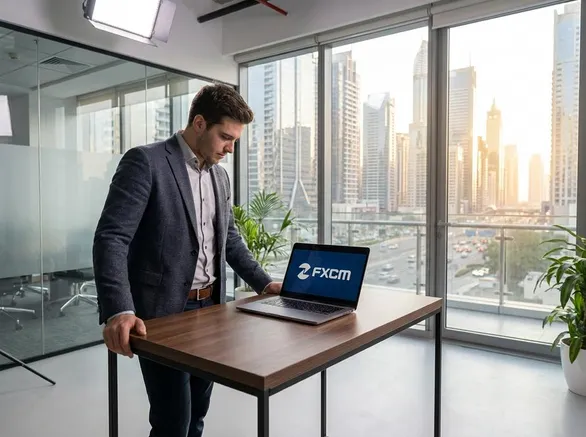
What FXCM Demo Accounts Offer

FXCM demo accounts are free to open and require only an email address and country of residence - no documents and no deposit are needed. The default virtual balance ranges from $20,000 to $50,000 depending on the FXCM entity, giving traders enough room to test strategies without financial risk. Demo accounts are available across four platforms: Trading Station desktop, TS Web, TS Mobile, and MetaTrader 4, so users can choose the environment that fits their workflow. Live buy and sell prices are used throughout the demo, meaning the practice conditions closely reflect what traders would see on a real account. FXCM allows traders to contact customer support to adjust both the demo balance and leverage settings, which is useful for simulating a more realistic account size. The demo remains active indefinitely as long as it is used; FXCM deletes accounts after approximately 30 days of inactivity, so regular login keeps the account open.

  • No deposit required
  • Virtual balance up to $50,000
  • Live price feeds on all platforms
  • Customizable leverage via support
  • Compatible with MT4 and Trading Station
Asset login 6mi9l

Demo Account Settings Worth Knowing

FXCM demo accounts are created with preset leverage, and that leverage changes depending on the FXCM subsidiary involved and the trader’s country of residence. For Indian users, there is no fixed leverage figure published on the demo landing pages. It depends entirely on which FXCM entity ends up handling the demo registration. FXCM allows both the leverage setting and the size of the virtual balance to be changed later by contacting customer support.

The ability to adjust these settings matters. Practicing with 50,000 USD in virtual funds while planning to fund a real account with only a small fraction of that amount can give a misleading impression of how volatile equity curves feel. Asking support to reduce the virtual balance produces a demo setup that is closer to a realistic starting point.

Demo profiles on FXCM are not set to expire on a fixed calendar date. Instead, FXCM removes inactive demo accounts after roughly 30 days with no activity at all. Logging in and sending at least one practice order is usually enough to keep the account alive and reset that inactivity timer. Traders in India who intend to return to a test environment after a long break should keep this in mind to avoid losing saved layouts and having to rebuild them.

There is another nuance that is easy to miss. FXCM lets users open a demo under any entity by shifting the country in the signup form, even if that entity would not accept that person for a funded live account. For Indian residents, this is directly relevant: certain FXCM branches do not take Indian clients for live CFD or forex accounts due to local regulatory reasons, but demo access through those entities may still be available.

MyFXCM Portal vs Demo Platform Login

A recurring point of confusion around FXCM logins is the difference between the MyFXCM portal and demo platform access. MyFXCM, at myfxcm.com, functions as an account management area for holders of funded, live accounts. It is the place where deposits, withdrawals, account statements, and security features such as two-factor authentication are handled.

The FXCM demo login does not route through MyFXCM at all. The demo username and password only work inside the trading platforms themselves - Trading Station or MT4. Trying to sign in on the MyFXCM portal with demo credentials simply fails, because the systems are separate and the credentials are not shared. For traders in India comparing brokers, keeping this distinction clear saves time that might otherwise be spent trying to fix a login combination that is technically valid, but not for that specific portal.

Instruments Available on FXCM Demo Accounts

Instrument CategoryExamples
Forex pairsMajor, minor, and exotic currency pairs
Indices CFDsGlobal equity indices
Commodities CFDsOil, gold, and other commodities
Shares CFDsEquities from major markets
Crypto CFDsBitcoin and other digital assets

The FXCM demo setup gives access to the same broad instruments that appear on the live platform. Forex pairs form the backbone, with contract-for-difference products on indices, commodities, individual shares, and crypto assets available in parallel. The precise list of symbols presented inside the platform after login can change slightly from one FXCM entity to another and between regions. Not every product is listed under every subsidiary.

One practical point applies regardless of jurisdiction or broker: a demo environment removes the emotional impact of risk. Virtual money does not create the same pressure as a live account, even when the numbers on the screen are large. That is why trading approaches that look smooth in a demo can behave very differently when real capital is involved. Aligning the demo balance with a realistic starting figure helps make position sizing and drawdowns feel less abstract, but it still does not recreate the psychology of actual gains and losses.

Regulatory Context for Indian Traders

Indian residents are subject to the rules of the Reserve Bank of India (RBI) and the Securities and Exchange Board of India (SEBI) for activities connected with foreign exchange and derivatives trading. Using a demo account with virtual funds does not involve a money transfer or an offshore funding step, so it does not fall into the same regulatory category as opening and financing a real account with a foreign broker.

FXCM runs its operations through several regional entities, including FXCM UK, FXCM Markets, FXCM Australia, and FXCM South Africa. None of these entities are supervised by SEBI or RBI. FXCM has been active since 1999 and presents itself as a global broker under various international regulatory licenses, but those licenses do not extend into the Indian regulatory system.

Any Indian trader planning to move from demo tests to funding a live account should look at current RBI and SEBI positions on offshore margin trading and CFD use before transferring funds. Trading leveraged forex or CFDs with an offshore platform involves both financial risk and possible regulatory implications. The FXCM demo environment remains reachable regardless of which entity is selected at signup, while the situation around live accounts is significantly more complex.

What to Check Before Using the FXCM Demo Login

Before spending several weeks testing strategies on the FXCM demo, it is worth confirming a few basic points.

  1. Check which FXCM entity the demo account belongs to, because leverage limits and the exact product list can differ from one entity to the next.
  2. Read through the demo email carefully to find the correct demo server name, with special attention for MT4 users.
  3. Keep in mind the inactivity rule: around 30 days without logging in usually triggers demo account deletion.
  4. If the standard virtual balance is far above what a real deposit would be, consider contacting FXCM support to request a lower, more realistic amount.
  5. Treat MyFXCM and the demo login as two different systems; demo credentials are for the platforms only, not for the MyFXCM portal.

If, after testing the FXCM demo, a trader feels unsure about the broker’s entity structure or uncomfortable with the absence of SEBI regulation for live accounts, it is reasonable to look at SEBI-regulated alternatives that operate under the local compliance framework. For practice and platform familiarisation, however, the FXCM demo login remains accessible regardless of which FXCM entity sits behind the registration.